
Can You Book Airport Assistance If Your Condition Isn't Visible?
Last updated
✦6 min read
When my flight from Edmonton landed at Amsterdam Schiphol, I was tired. I hadn't slept much on the flight over.
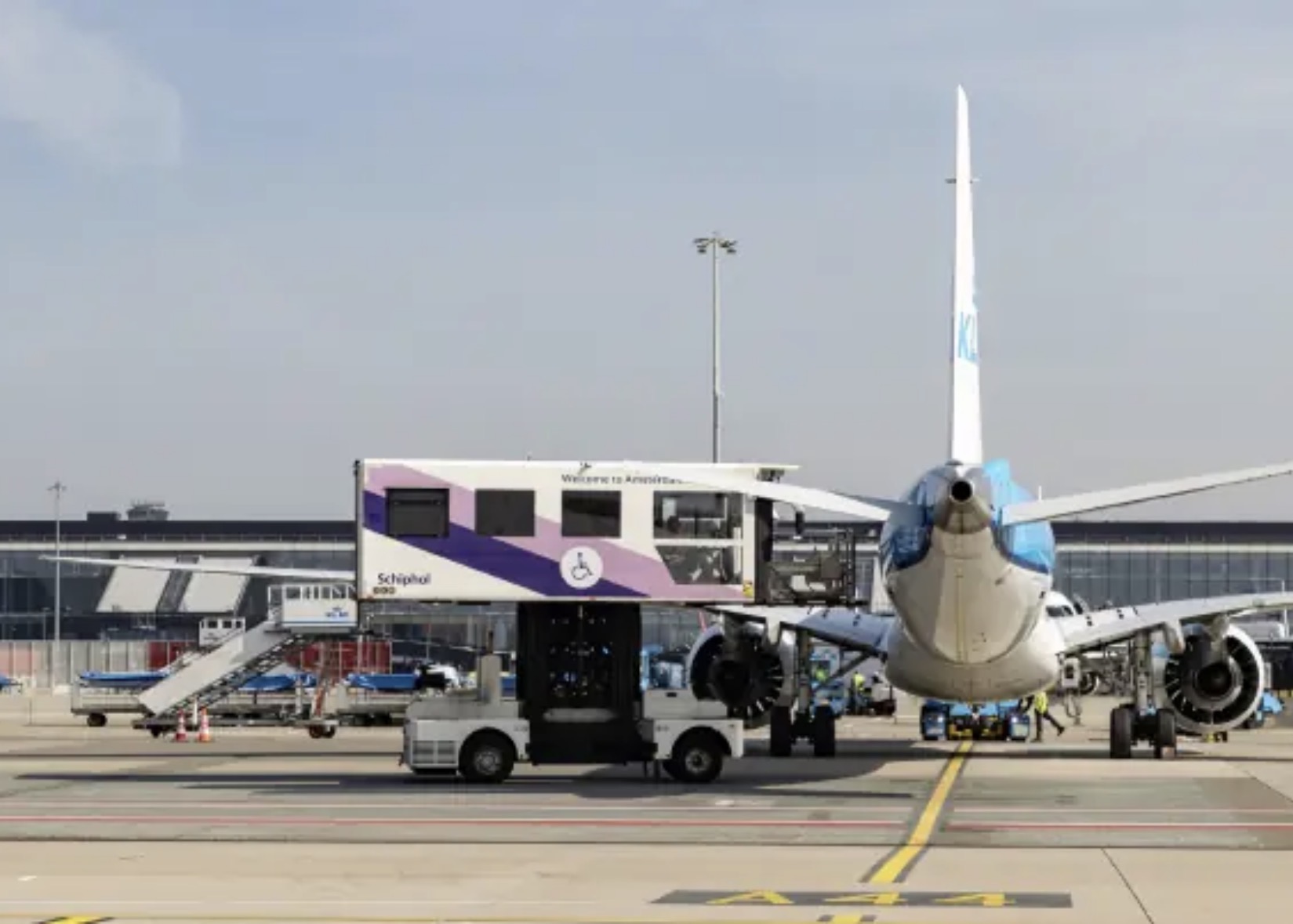
I walked off the plane and along the jet bridge on my own. Then I stopped and waited for the assistance shuttle, instead of setting off down the long corridors to my connecting gate. It took me through a dedicated passport control line and on to my gate. When it was time to board, I didn't climb the aircraft stairs. A lift raised me, slowly, to the cabin door.
From the outside, nothing about me says I need it. That's the part I want to talk about.
The question I hear most from women whose health challenges can't be seen is this one: am I allowed to ask for help at the airport when I look fine?
The short version
Yes. Across the European Union, plus Norway, Iceland and Switzerland, Regulation (EC) No 1107/2006 gives anyone with reduced mobility the right to free assistance at the airport, and that includes conditions nobody can see. Book it through your airline when you book your flight, and no later than 48 hours before departure. On a connection at Schiphol, that help can run from the aircraft door, through passport control, to the gate for your next flight.
What did assistance at Schiphol actually look like?
I booked it through KLM when I booked my flights from Edmonton (YEG) to Nuremberg, connecting through Amsterdam (AMS) on the same booking.
When we landed, I walked off the plane myself and met the assistance team right at the gate. Demand for assistance on that flight was high, so I waited about 15 minutes for the shuttle instead of setting off on foot. On the way, the team asked how I manage stairs, because the Nuremberg flight boarded by bus, out to stairs on the tarmac, and they wanted the lift there in time for boarding. The shuttle took me through a dedicated passport control line and across the airport to gate B5, a walk that would have taken me about 30 minutes.
What stayed with me was how well organised the assistance team was, even with so many of us needing help off one flight.
I reached B5 with something left for the next flight. When it was time to board, the lift transfer took me from the terminal to the airplane, and then the lift raised me from the tarmac to the aircraft door, so I didn't have to climb the stairs. The team helped four of us board that plane.
On a travel day, arriving with something left is the whole point.
Why is it so hard to ask when you look fine?
Let's name what's actually happening here.
When your condition can't be seen, every request for help comes with a second conversation, the one in your own head. Will they think I'm exaggerating? Am I taking a place from someone who needs it more? Can I push through one more time?
I know that conversation well.
And yet.
The regulation covers reduced mobility from any cause, including age. That reaches people living with chronic pain, anxiety, autism or dementia, who need more time, clearer guidance or a shorter route through the terminal. A temporary injury counts too.
Asking is also how the system is designed to work. The airport plans its staff from the airline's list, so a need that was never booked can mean a long wait on the day. Booking ahead is the considerate choice, for you and for the people meeting you.
Most of us have spent years boarding everyone else first. This is one place where taking your own seat early makes the day easier for everyone.
What does booked assistance include?
- Arriving at the airport. Signposted meeting points at entrances, car parks and transit stops. At Schiphol, a pick-up from the train station, bus stop, taxi stand or car park can be arranged in advance.
- Check-in, bags, security and passport control. Help with luggage, and extra time through screening and border checks.
- To the gate and on board. A wheelchair or cart to the gate, priority boarding where offered, and help to your seat. An aisle chair where a standard wheelchair won't fit, and the lift if aircraft stairs aren't safe for you.
- Connections. Help between flights, as long as both flights are on the same booking and assistance was requested.
- On arrival. Help off the aircraft, through passport control and baggage reclaim, and out to your onward transport.
- Mobility aids. Airlines departing European airports carry up to two per person free, on top of your baggage allowance.
What it doesn't cover: personal care such as eating, medication or the washroom, and short connections. KLM recommends at least 2.5 hours for connections at Schiphol if you're using wheelchair assistance.
Where does the Sunflower lanyard fit?
I didn't wear one on this trip. I didn't know much about it until I started researching this article, and I'll have one before my next flight.
The Hidden Disabilities Sunflower is a green lanyard printed with yellow sunflowers. It began at London Gatwick in 2016 and is now recognised by more than 330 airports. There's no application and no proof, and you never have to name your condition. It tells trained staff you may need more time, patience or a clearer explanation.
At Schiphol, lanyards are free at the assistance desk in the departure hall. Closer to home, Edmonton and Calgary both take part, and Air Canada hands them out at check-in at member airports, and on board if you ask the crew.
The lanyard asks for patience. The wheelchair, the cart and the lift still need to be booked through your airline.
How do you know if booking assistance is right for you?
These are the questions I want clients to ask themselves before we book a European flight:
- The walk. Would the distance from the aircraft to your connecting gate cost you the rest of your day?
- The standing. Could you stand comfortably through a long security or passport queue?
- The stairs. Are aircraft stairs safe for you, with a carry-on, at the end of an overnight flight?
- The first day. If you arrive depleted, do you lose the first day of your river cruise or city stay?
- The good days and the hard days. If your health varies, book for your harder days. The help will be there if you need it.
A yes to any one of them is reason enough to book it.
Arriving well
The lift raised me to the door of my connecting flight, and nobody asked me to justify it. I'd booked what I needed, and it was waiting for me.
You are allowed to arrive restored.
Everything here, and more, is in my free guide, Flying Through Europe with Reduced Mobility. Email me at hello@oneluxejourney.ca and I'll send you the full guide.
Amsterdam is where many Rhine sailings with AmaWaterways, Avalon Waterways and Scenic begin or end. If you're planning one, or any trip through Europe, and you'd like assistance built into the plan from the first booking, I'd love to have a conversation. Not a sales call. Not a pitch. Just a conversation.
It's your turn now.
Hero photo: Schiphol. Sources: Regulation (EC) No 1107/2006, EUR-Lex; What services can travellers with a disability expect at Schiphol?, Schiphol; Mobility assistance, KLM; Air Canada launches the Sunflower, Hidden Disabilities Sunflower; and Sunflower program, Calgary International Airport. Airport programs change, so check your airports' pages before you travel.
Questions I hear often
Related field notes
The One-Page Insurance Certificate I'm Packing for Europe
A ten-minute call to your insurer before you leave, and one sheet of paper in your bag. Here's what it should say, and why I'm doing it for my own trip in November.
Read more →River Cruise EducationWhich River Should Be Your First River Cruise? A Canadian's Guide to the Rhine, Danube, Seine and Douro
Every European river starts with an overnight flight from Canada. Here's how to choose the one worth flying for, and what the new ocean brands coming to the river mean for your timing.
Read more →Girlfriend & Solo TravelIs It Safe for a Woman to Travel Solo on a European River Cruise?
The question every woman asks before she books alone, answered honestly by someone who's done it herself, more than once.
Read more →Ready to plan your own journey?
No pressure, no pitch. Just a conversation about what might be possible.
Work with PennyA personal note
When you're ready, I'm here
No pressure, no commission-driven pitch. Just an unhurried conversation about the river, the season, and the ship that fits where you are in life right now.
— Penny